

 1-888-601-9980


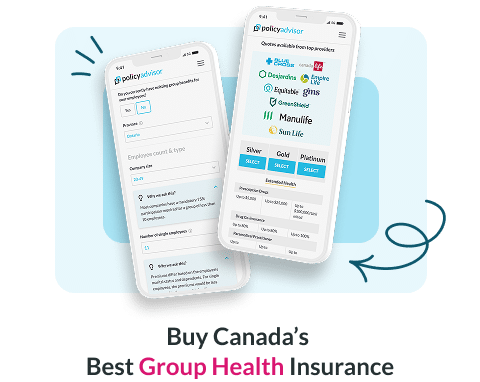
- Group benefits are employer-sponsored plans that typically offer lower per‑member costs than buying coverage individually
- Depending on the organization, group health insurance can be offered at no cost, or the premium can be split between the employer and the employees
- Group health insurance provides coverage for dental and vision care, hospitalization, drugs, and other health care services
- Some of the top companies offering group medical insurance include Sun Life, Canada Life, Manulife, Desjardins, and GreenShield
In Canada, group health insurance is no longer just about health care; it has become a key driver for employee retention. According to Employee Benefits Statistics in Canada, around 99% of Canadian employers now provide supplementary health care coverage to salaried employees.
This reflects how essential these plans have become in helping businesses stay competitive and support employee well-being beyond what the public health care system covers. Whether you are an employer who is looking to offer group health insurance to your employees in Canada or someone who is simply curious about how an employee benefits plan works in Canada, this blog is for you. Read on to learn more!
How much does Group Insurance cost?
Get instant quotes from Canada's top group insurance providers and find the perfect coverage for your business.
Powered by

What is group health insurance?
Group health insurance, also known as a group plan or employer-sponsored coverage, is a type of health insurance that an employer purchases and offers to its employees and their dependents. This group of people is accordingly covered under a single policy, offering benefits such as:
- Dental and vision care
- Hospitalization
- Prescription drugs
- Chronic disease coverage
- Other healthcare services
Employers or organizations usually negotiate the terms of the insurance policy and may subsidize part or all of the premium costs for their employees or members. Group health insurance is typically offered to all full-time or part-time workers as part of an employee benefits program.
How does group health insurance work in Canada?
The employer is the primary policyholder of a group health plan which covers all or some of the employees in an organization. Most insurers require a minimum participation rate of approximately 75% to 100% of eligible employees, depending on the size of the group and plan design.
Group health insurance policies in Canada typically work in the following way:
- Employer chooses a plan: Employers select a plan to offer their employees and negotiate terms with an insurance provider. Plans can include core benefits like health, dental, vision, and prescription drugs, along with optional coverage such as life insurance, disability insurance, and employee assistance programs
- Employee enrolment: Employees can choose to enrol in or decline a group medical insurance plan during the specified annual enrolment period. They have the option to choose from a few plan options and coverage levels. To mitigate risk across a larger group and prevent adverse selection, most insurers require minimum participation
- Premium payments: Premium costs are usually shared between the employer and employees. Employers pay the insurer directly and deduct the employee’s share from payroll
- Coverage for dependants: Employees can extend coverage to eligible dependants, such as spouses and children, typically at an additional cost
- Using the benefits: Once enrolled, employees can access covered services as needed. To reduce the drug costs, many insurance companies, including Manulife, Desjardins, Canada Life, and a few others, directly settle the drug expenses
- Annual renewal: Plans are reviewed and renewed each year. Premiums may be adjusted based on factors like claims experience, group size, and overall usage
- Plan administration: Employers may manage the plan internally or work with insurers or third-party administrators to handle claims processing, support, and ongoing plan management
Employee enrollment process for group health insurance
To ensure a smooth administration of group health coverage, employers should follow the steps mentioned below:
- Inform the employees about the available health plans, coverage options, and enrollment period
- Employees should select their plan and if they want to add dependents, if applicable
- Employees will have to fill out a form with the designated coverage options as well as their personal information
- Employees will submit the forms to the employer or HR department within the pre-discussed timeframe
- Once the enrollment procedure and verification are complete, employees will receive confirmation and health insurance cards
Employee eligibility criteria for group health insurance in Canada
- Employment status: Employees must be actively employed, either full-time or part-time, by the organization offering the group plan. Depending on the plan’s requirements, temporary, contractual, or seasonal workers may also be eligible
- Minimum hours worked: Employees typically need to work a minimum number of hours per week, often 20-30 hours, to qualify for the group plan. Some plans may have different minimum-hour requirements
- Residency requirements: Employees generally need to be Canadian residents eligible for provincial health coverage. Individuals with valid work permits may also qualify under many plans. Please note that citizenship or permanent residency is not always required; eligibility is typically tied to provincial healthcare coverage
- Age limits: Group plans typically cover employees up to the age of 65 or 70. Dependent coverage may be available for spouses and children up to a certain age, often 19-25 years old
- Pre-existing conditions: Group plans mostly include coverage for pre-existing medical conditions. However, there can be limits on the coverage
- Minimum group size: Employers must have a minimum number of eligible employees, often 2-10, to qualify for a group medical insurance plan
How much do group health plans cost?
The cost of a group health plan varies depending on the type of package an employer purchases, with options such as basic, advanced, and premium offering different levels of coverage. Each package offers different coverage, and depending on who is covered, the premiums can vary. For small businesses, a benefits plan can cost about 5-15 percent of the total payroll on an annual basis.
In the following table, we have included representative average premium costs for a group health insurance plan based on who is covered, the plan type, and coverage options:
| Coverage type | Benefits offered | Premium |
| Basic |
|
|
| Advanced |
|
|
| Premium |
|
|
How is group health insurance different from individual plans?
While group health insurance is purchased by an employer and covers the employees of an organization, an individual health insurance plan, as the name suggests, is purchased independently by an individual for their own needs. Individual health insurance plans, also known as personal health insurance or private medical insurance, vary based on the individual’s age, medical history, and lifestyle (whether they’re smokers etc.). The table below outlines the differences between group health insurance and individual health insurance:

Benefits of group plans for employers
Offering group health benefits is an effective way to promote employee well-being and morale. It also:
- Helps organizations attract and retain talent
- Can be written off as a business expense, hence saving tax for the organization
- Encourages employees to seek preventive care, promoting a healthier and more productive workforce
- Depending on the location of the organization, offering health insurance coverage to employees may be required by law. Providing group health insurance ensures compliance with applicable regulations
Group health benefits for employees
With a group health insurance plan in Canada, employees also get:
- Access to a wider range of medical services like dental care, vision care, prescription medication, emergency travel, life insurance, etc.that are not covered under provincial plans
- Lower premiums as compared to other individual plans
- The option to add family members and current and future dependants to their policy
- Coverage for pre-existing medical conditions
- Incentives for preventive care and wellness programs, motivating employees to adopt healthier lifestyles
What do employee benefits cover?
Group health policies and employee benefits, although distinct, are often used interchangeably. A group health insurance plan is part of an employee benefits package, offered by employers to their employees. While group health insurance is a significant component of employee benefits, it is not the only one. Other common employee benefits may include life insurance, disability insurance, paid time off (such as vacation days and sick leave), wellness programs, and more.
Depending on the plan an employer chooses, group employee benefits typically include a variety of health and other non-medical benefits.
| Coverage category | Covered services & items |
| Healthcare | – Private hospital coverage |
| – Medical expenses | |
| – Medical equipment | |
| – Some elective surgeries | |
| – Care homes and nurses | |
| Vision care coverage | – Eye exams |
| – Glasses | |
| – Contacts | |
| Dental coverage | – Teeth cleanings |
| – X-rays | |
| – Cavity fillings | |
| – Orthodontics (braces) | |
| Prescription drugs | Generic and branded medications |
| Health spending account | A fixed annual amount that employees can spend on any item or service that improves their health |
| Employee assistance and wellness | Access to preventative health assessments and wellness resources including clinical counselling |
| Virtual access | Some insurers have online access to doctors and health service providers which an insured employee can avail of |
| Hospitalisation | Access to semi-private or private rooms upon hospitalization and ambulatory care services |
| Medical emergency travel | – Coverage if you have a medical emergency while travelling |
| – Trip cancellation/interruption | |
| Critical illness | A lump sum payment if you are diagnosed with a critical health issue |
| Life insurance | A lump sum payment if you pass away from natural or accidental reasons |
| Short & long-term disability insurance | Salary replacement if you become disabled and cannot work for a short or long period of time |
| Accidental death and dismemberment (AD&D) insurance | Financial assistance if you have an accidental death, are dismembered, or lose your sight or upon loss of use of limbs. This would be in addition to a life insurance payment |
Pros and cons of employee health insurance
| Pros | Cons |
| Lower premiums as the risk is spread across the group | Benefits end when the employee leaves the job |
| No or minimal medical underwriting | Premiums may increase based on group claim experience |
| Comprehensive coverage for dental, vision, prescription drugs, and more | Minimum participation required to maintain the plan |
| Optional benefits, like life insurance, disability coverage, and wellness programs, are also available | |
| Provides tax benefits to both the employer and employee |
Group health insurance for the self-employed
While self-employed individuals don’t have access to traditional employer-sponsored group health insurance, there are a few options for obtaining group coverage:
- Individuals can opt for professional association benefits if they’re a part of any trade organization
- Self-employed individuals can enroll themselves as a dependent if their spouse’s company provides an employer-sponsored benefit
- Some insurance providers offer group plans specifically designed for small businesses, including self-employed individuals
Considerations for self-employed individuals
When self-employed individuals consider enrolling themselves under a group health insurance plan, there are a few things that must be taken into consideration:
- Eligibility requirements: Associations or small business groups may have minimum membership or employee requirements
- Portability: Coverage is tied to the group plan, so it may not be portable if you leave the association or small business
- Customization: Group plans offer less flexibility to customize coverage compared to individual plans
What to do if you lose your group health benefits?
If you’re on the verge of losing your group health insurance benefits due to a job switch or any other reason, you may need to consider other options.
You may choose to continue your coverage out of your own pocket. Continuation of coverage can be a little expensive, and the paperwork for the transfer can be overwhelming. Another option is to convert your group medical insurance into an individual plan. For converting to an individual plan, there won’t be a need for new underwriting (depending on the insurer).
Recommended small business health insurance companies in Canada
- Sun Life: Offers a range of group health insurance products that include digital tools to manage employee onboarding, benefits, reports, billing statements, and more
- Canada Life: Offers health, dental, life, disability insurance, and more
- Manulife: Offers flexible group benefits coverage
- Desjardins: Delivers innovative group health insurance offerings like the Manager Assistance Program, Health is Cool 360° Platform, and more
- Green Shield Canada: Offers employee benefits solutions like the iBenefits platform, specialty care program, claims management assistance, etc
Read about how small businesses can offer health insurance perks to their employees
Choose the right employee health insurance in Canada
If you’re looking for the right kind of group health insurance plan, our licensed insurance advisors will be happy to help! We’ll ask for some basic information about your business (industry type, number of employees, claims history, etc.) and will help you find the perfect plan for your organization and employees.
Frequently asked questions
Who pays for group health insurance?
Generally, there are three main ways group health insurance premiums are paid: employer-sponsored plans, cost-sharing arrangements, and employee add-on contributions. In employer-sponsored plans, the employer covers the full cost of the benefits. In cost-sharing arrangements, the employer and employees split the premium at a predetermined ratio. Additionally, employees may choose to pay extra for add-ons, such as extending coverage to dependents or upgrading to a plan with enhanced benefits.
How does coordination work in group health plans?
Coordination of benefits (COB) is a process used by health insurance companies to determine the order in which they pay medical claims when a person is covered by more than one health insurance plan. COB ensures smooth and consistent processing of medical claims when someone has more than one health insurance plan. The primary insurer pays first, and the secondary insurer covers any remaining costs, up to the total allowed amount.
Where can you find group health insurance plans?
Group health insurance plans are usually provided by employers or by an association. If your employer does not provide a group health insurance plan, you must check out group benefits provided directly by insurance companies. Companies such as Sun Life, Canada Life, Desjardins, Manulife, etc., have developed the most comprehensive group health insurance plans that can be customized to suit your specific needs.
Who is eligible for group health insurance?
An employer or organization can choose to offer group health insurance to its employees including full-time, part-time, and contractual workers, depending on the company’s policy. In some cases, eligibility may extend to family members, such as spouses and dependent children, if the plan includes coverage for them. The eligibility criteria for providing group health insurance can vary based on factors like the size of the organization, employment status, and specific insurance provider requirements.
Do employees pay for health insurance in Canada?
Employee benefit plans are typically offered as a workplace perk, with organizations covering most of the premium costs. However, many employers offer these benefits on a cost-sharing basis. This means employees may be responsible for paying a portion of the premium through payroll deductions. In some cases, employees may also have the option to purchase additional coverage, such as extended health benefits, dental care, or vision care, at their own expense.
Are group health plans mandatory in Canada?
No, group health plans are not mandatory in Canada. Employers are not legally required to provide them, but many choose to do so as a way to support employee well-being and enhance job satisfaction. These plans are commonly offered as a workplace benefit to attract and retain talent. Group health plans can also help reduce absenteeism and improve the overall productivity of the workforce.
What is the minimum size for group health insurance?
Most insurers require a minimum of two participants in a group health benefits plan, including an employer and at least one employee. The exact requirements may vary depending on the insurance provider and the type of business. Some insurers may have higher minimums, especially for specific plans requiring higher coverage and benefits.
Group health insurance plans are an excellent employee benefit that an organization offers to its members. It typically requires at least 70% enrollment rates so that an insurer’s risk is spread out. Unlike Canada’s provincial health plans, group health benefits offer supplemental coverage like coverage for prescription medications, dental and vision care, critical illness care, etc. It is the most affordable and accessible type of health insurance in Canada.